Cannibalism in the 20th century

Soviet political starvation of Ukraine:

“With starvation will come cannibalism. There came a moment in Ukraine when there was little or no grain, and the only meat was human. A black market arose in human flesh; human meat may even have entered the official economy. The police investigated anyone selling meat, and state authorities kept a close eye on slaughterhouses and butcher shops. A young communist in the Kharkiv region reported to his superiors that he could make a meat quota, but only by using human beings. In the villages smoke coming from a cottage chimney was a suspicious sign, since it tended to mean that cannibals were eating a kill or that families were roasting one of their members.”

Excerpt From: Timothy Snyder. “Bloodlands: Europe Between Hitler and Stalin”. Apple Books.

Flesh baquests at the height of the Cultural Revolution

“In 1968 a geography instructor named Wu Shufang was beaten to death by students at Wuxuan Middle School. The body was carried to the flat stones of the Qian river where another teacher was forced at gunpoint to rip out the heart and liver. Back at the school the pupils barbecued and consumed the organs.”

‘Flesh banquets’ of China’s Cultural Revolution remain unspoken, 50 years on

Organized cannibalism in the 1845 HMS Erebus expedition looking for the North-West passage:

“Both archaeological evidence and reports from Inuit locals gathered by the many explorers sent to rescue the expedition indicate that the crew fragmented, moved south, and cannibalism ensued. In one report, an Inuit band encountered one of the crew’s parties. They gave the hungry men some seal meat but quickly departed when they noticed the crew transporting human limbs. Remains of the expedition have been located on several different parts of the island. There is also a rumor, never confirmed, that Crozier made it far enough south that he fell in with the Chippewa, where he lived out his days hiding from the shame of sustained and organized cannibalism.2”

Excerpt From: Joseph Henrich. “The Secret of Our Success: How Culture Is Driving Human Evolution, Domesticating Our Species, and Making Us Smarter”. Apple Books.

(side note, HMS Erebus by Simmons I am told is a fine horror book)

Humans are one of the biggest biomasses on earth, cannibalism is inevitable in the occasion os some future catclysm ? https://en.wikipedia.org/wiki/Biomass_(ecology)
 

Facebook and antitrust (reading list)

Relevant Market https://www.mercatus.org/bridge/commentary/facebook-and-antitrust-part-1-what-relevant-market

Consumer Harm https://www.mercatus.org/bridge/commentary/facebook-and-antitrust-part-2-where-consumer-harm

don t forget to check for part 3

Part 3: Will structural remedies solve allegd problems ? https://www.mercatus.org/bridge/commentary/facebook-and-antitrust-part-3-will-structural-remedies-solve-alleged-problems

energy, follow the money

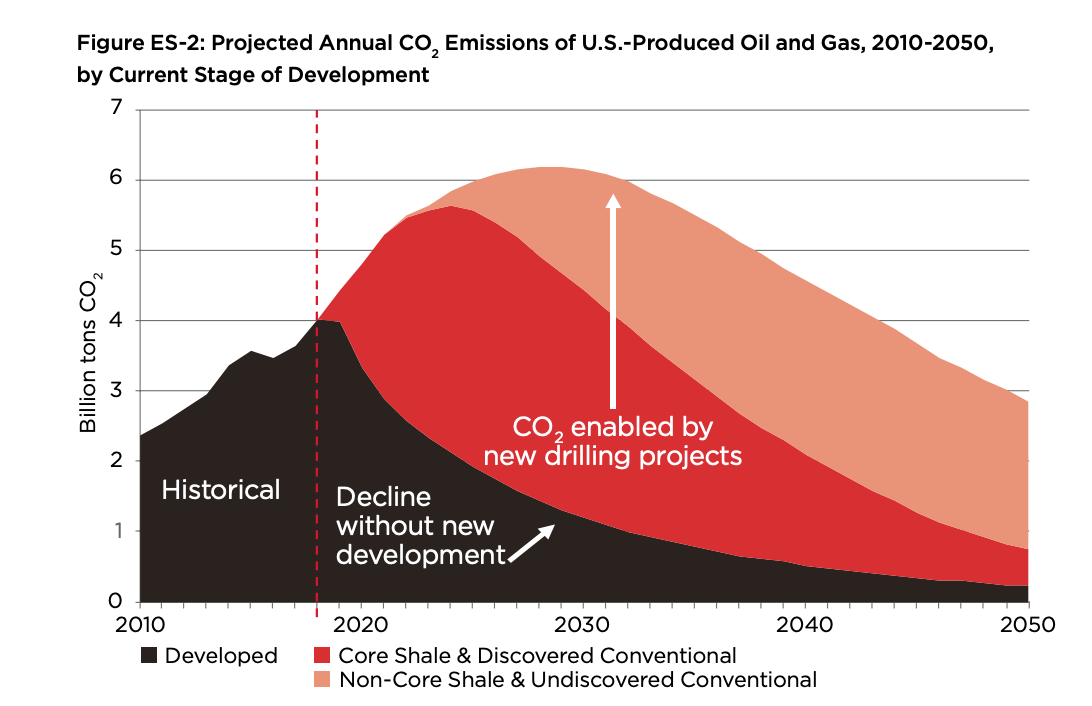
Screenshot 2019-06-12 at 11.26.03US dominance in oil makes impossible to reduce emissions and meet green targets

new shale oil developments will eat all of USA allowances of carbon emissions under Paris Agreement

1,9 trillion from banks to fossil fules in USA since Paris in 2016

only 1,3% of investments to renewables by oil majors

thanks to Adam Tooze, links to specific tweets:

based on reports from:

Rainforest Action Network https://www.ran.org/bankingonclimatechange2019/#data-panel

PriceofOil.org http://priceofoil.org/content/uploads/2019/01/Drilling-Towards-Disaster-Web-v3.pdf

(will all these links survive of be lost as tears in the rain ? Should I screenshots like there is no (internet) tomorrow?)

here’s the screens 🙂

is algorithmic death inevitable ?

Ben Evans says that algo is necessary, the newsfeed can’t be consumed if it’s not algorithmic,necessary evil ? Whenever I read himthe death of the newsfedeed seems his defense against thinking of any action against GAFA monopolies

https://www.ben-evans.com/benedictevans/2018/4/2/the-death-of-the-newsfeed

On the other hand I alway think I should be able to plug my algo’s and filters to my newsfeed, and Cory Doctorow nails it in his request to promote interoperability, Subject platform to rules but exempt syndication services from all. I should be able to let my 3rd-party provider of choice organize my online world, not Zuckerberg

https://www.economist.com/open-future/2019/06/06/regulating-big-tech-makes-them-stronger-so-they-need-competition-instead

(citations needed)

Investors want B’s, baby!

“Altman saw Chesky’s pitch deck and told him it was perfect, except that he needed to change the market-size slide from a modest $30 million to $30 billion. “Investors want B’s, baby,” Altman told Chesky. Of course, Altman wasn’t telling Chesky to lie; rather, he argued that if the Airbnb team truly believed in their own assumptions, $30 million was a gross underestimate, and they should use a number that was true to their convictions. As it turns out, Airbnb’s market was indeed closer to $30 billion.”

Excerpt From: Reid Hoffman. “Blitzscaling”. Apple Books.

throughout 2001 and 2002 the most difficult thing to pitch about my online video startup was the market size. I had this idea of internet becoming the newsgathering platform and later a place where all creators would publish their videos, I was 100% on open publishing but my company, in the first bust, was pitched as a pro channel for news and I struggled to size the potential market via jobbing the numbers of news agencies and tv networks. Which came in the 30 millions rather than 30 billions (or rather in phantasy number deducted from cloudy market data, while I could have better guessed billions from the “attention industry” even not getting the revenue model right, I was betting on licensing fees and micropayments while the model was eventually but by youtube on advertising and only later on reward for creators

I am sure, had I  been able to spell better my vision into potential market guesses, I could have communicated it better to investors. I like very much this insight by Reid Hoffmann in his book.

Waste the photovoltaic cell

“In its first decades, the oil business provided an industrializing world with a product called by the made-up name of “kerosene” and known as the “new light,” which pushed back the night and extended the working day. At the end of the nineteenth century, John D. Rockefeller had become the richest man in the United States, mostly from the sale of kerosene. Gasoline was then only an almost useless by-product, which sometimes managed to be sold for as much as two cents a gallon, and, when it could not be sold at all, was run out into rivers at night. But just as the invention of the incandescent light bulb seemed to signal the obsolescence of the oil industry, a new era opened with the development of the internal combustion engine powered by gasoline.”

Excerpt From: Yergin, Daniel. “The Prize”. Apple Books.

From the 2008 preface. The idea that a revolution will happen only once PV energy will be priced so low that it will be sold cheap, dispersed into ground, wasted. Before new application will be found and revolutionise the world (hydrogen? what else?)

Comes to me from reading Gilder and Telecosm, this quote found on wired by googleing “waste the bandwidth” the tagline of Gilder’s book that stuck to me:

“You had to “waste” the power of the steam engine and its derivatives in order to prevail, whether in war or in peace. Over the last 30 years, we’ve seen transistors (or switching power) move from being expensive, crafted vacuum tubes to being virtually free. So today, the prime rule of thrift in business is “waste transistors.” We “waste” them to correct our spelling, to play solitaire, to do anything. As a matter of fact, you’ve got to waste transistors in order to succeed in business these days.

My thesis is that bandwidth is going to be virtually free in the next era in the same way that transistors are in this era. “

Now it’s paywall, should i link it ? Ok I ll link it https://www.wired.com/1993/04/gilder-4/

VC power curve

6% of the deals make 60% of the profits

Screenshot 2019-06-10 at 14.45.34

VC’s performance is driven by how big are their hits, not how many their flops

Screenshot 2019-06-10 at 14.45.18

Screenshot 2019-06-10 at 14.48.27.png

from Ben Evans “In Praise of Failure”

found on Chen of a16z  “Why startups are hard — the math of venture capital returns tells the story”

Found at Fred Wilson’s https://avc.com/2019/09/the-hit-rate/

the rate of return of the whole VC industry correlates perfectly with the share of investment generation 10X+ returns

Screenshot 2019-09-18 at 15.43.19